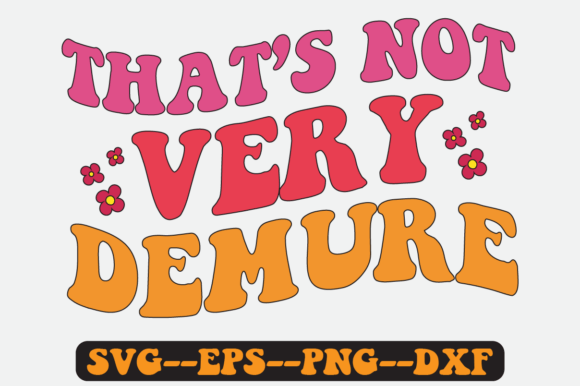
Not Very Demure Groovy Retro SVG Design Review
I have spent years reviewing digital assets for my own boutique and the clients I consult with, so when Not Very Demure Groovy Retro SVG Design landed on my desk, I didn't just look at the preview image. I immediately started thinking about how it would translate from a vector file into a physical object. As an experienced designer, my first impression of this piece is one of bold confidence. The name itself sets the tone: it is unapologetic, nostalgic, and packed with personality. It feels like a design that wants to be seen, making it a perfect candidate for statement pieces in the crafts and graphics category.
The "groovy retro" aesthetic is currently flooding the market, but not all designs handle the transition to embroidery well. Many rely too heavily on thin lines that get lost in the fabric or complex gradients that simply do not exist in thread. From what I can gather, Not Very Demure Groovy Retro SVG Design leans into shapes and strong visual elements that suggest good stitchability. It creates a mood that is fun and slightly rebellious, which fits perfectly with modern handmade trends where buyers want unique, conversation-starting items rather than generic stock.
Real-World Application: The Custom Sweatshirt Scenario
Let's imagine a real-life scenario to test this design's practicality. I am preparing a custom order for a local boutique that specializes in vintage-inspired streetwear. They need a specific design for their new line of oversized hoodies and sweatshirts. The client wants something that captures the 70s spirit without looking like a costume. This is where Not Very Demure Groovy Retro SVG Design shines.
If I were to digitize this for machine embroidery, I see it working beautifully as a chest pocket placement or a large back graphic. The layout suggests enough negative space to allow the stitches to breathe, preventing the fabric from becoming stiff and unwearable. For a sweatshirt, the design would likely use a combination of satin stitch for the outlines and fill stitch for the larger colored areas. The result would be a textured, tactile finish that adds value to the garment. Unlike a simple print, an embroidered version of this groovy theme gives the product a premium feel that customers are willing to pay more for.
However, if we shift this same design to a baby onesie, the approach changes entirely. While the retro vibe is timeless, the scale must be adjusted. A full-size version might overwhelm a tiny infant's body. In this case, Not Very Demure Groovy Retro SVG Design would need to be scaled down significantly, perhaps focusing on just the central iconography. Even then, I would advise against placing dense stitching near the neck or cuffs of a onesie due to comfort concerns. The design works best on sturdier fabrics like cotton twill or heavier jersey knits where the structure can support the embroidery weight.
Where to Use (and Where to Think Twice)
While this design is versatile, there are specific environments where it requires caution. If you are planning to use this for a small hoop size, such as on a baseball cap or a hat brim, you must analyze the detail level carefully. Embroidery has limits; very fine details can disappear when compressed into a small area. If the original vector contains intricate curves or tiny text, those elements might blur together during the stitching process, ruining the "groovy" clarity.
Textured fabrics present another challenge. If you attempt to embroider this on a rough burlap tote bag or a highly looped fleece, the needle path might struggle to penetrate evenly, leading to puckering or uneven coverage. Similarly, stretchy fabrics like thin tank tops require a stabilizer strategy that prevents the design from distorting as the fabric moves. Without proper backing, the tension of the threads could pull the material out of shape, especially around the edges of the letters or curves.
Dense stitch areas are also a consideration. If the design relies heavily on fill stitches to create color, using it on dark fabric requires a high density of underlay stitches to ensure the top thread covers the background completely. If the density is too low, the dark fabric will show through, making the colors look muddy rather than vibrant. Conversely, on light fabrics, the contrast will be sharp, enhancing the retro appeal.
Visual Appeal and Product Value
In the world of Etsy sellers and craft business owners, presentation is everything. A well-executed embroidery project elevates a simple product into a luxury item. When Not Very Demure Groovy Retro SVG Design is stitched correctly, it signals professionalism and attention to detail. Customers can feel the quality of the work, which builds trust and encourages repeat purchases.
This design is particularly effective for personalized gifts. Imagine a holiday gift set featuring a kitchen towel and an apron both adorned with this groovy motif. The consistency in branding across different products creates a cohesive look that makes the shop appear established and reliable. It transforms a standard commodity into a curated experience. The playful nature of the design invites emotional engagement, making it a memorable gift for birthdays, weddings, or housewarmings.
For commercial embroidery projects, the versatility is key. Whether you are creating embroidered patches for jackets, decorating pillow covers for nursery decor, or adding flair to tea towels, this asset offers a wide range of applications. The "graphics" aspect of the file means it is likely scalable, allowing you to adapt it for various product sizes without losing its core identity. However, always verify the licensing terms before selling finished items derived from this digital download to ensure you are compliant with the creator's rules.
Practical Designer Notes for Success
Before you commit this design to your production line, here are some essential steps to ensure a flawless outcome:
- Test on Scrap Fabric: Always run a test stitch on a scrap piece of the exact fabric you plan to use. This helps you gauge how the material reacts to the tension and whether the stabilizer choice is correct.
- Check Thread Color Contrast: Review your thread palette against the intended background. High contrast usually yields the best results for retro styles, ensuring the design pops off the fabric.
- Inspect Small Details: Zoom in on the digital file. Are there any tiny corners or thin lines that might break during stitching? You may need to simplify these elements in your digitizing software.
- Confirm Hoop Size: Ensure your machine hoop can accommodate the maximum dimensions of the design without cutting off important parts.
- Use Proper Stabilizer: Heavy-duty designs require heavy-duty stabilization. Do not skimp on this step, or your finished product will look wrinkled and amateurish.
- Review Stitch Density: Check the density settings in your embroidery software. Too much thread can cause puckering, while too little can leave gaps.
- Mockup Testing: Create black and white mockups to see how the shapes hold up without the distraction of color. This reveals structural issues early.
- Licensing Verification: Double-check if the license allows for commercial use on sold items. Some files are for personal use only.
Ultimately, Not Very Demure Groovy Retro SVG Design is a strong addition to any designer's arsenal. It brings a distinct energy that stands out in a crowded marketplace. By understanding its strengths and limitations, you can leverage its potential to create high-quality, handmade products that resonate with customers. Whether you are a hobbyist making a one-off gift or a small business owner scaling up production, this design offers the flexibility and style needed to succeed in the modern crafting landscape.
Remember, the difference between a good embroidery project and a great one often lies in the preparation and the thoughtful application of the design. Take the time to evaluate how Not Very Demure Groovy Retro SVG Design interacts with your specific materials and machine settings. With the right approach, you can turn a simple digital file into a tangible piece of art that people will cherish for years.